
Understanding Forests as Self-Regulating Systems
Jun 12, 2026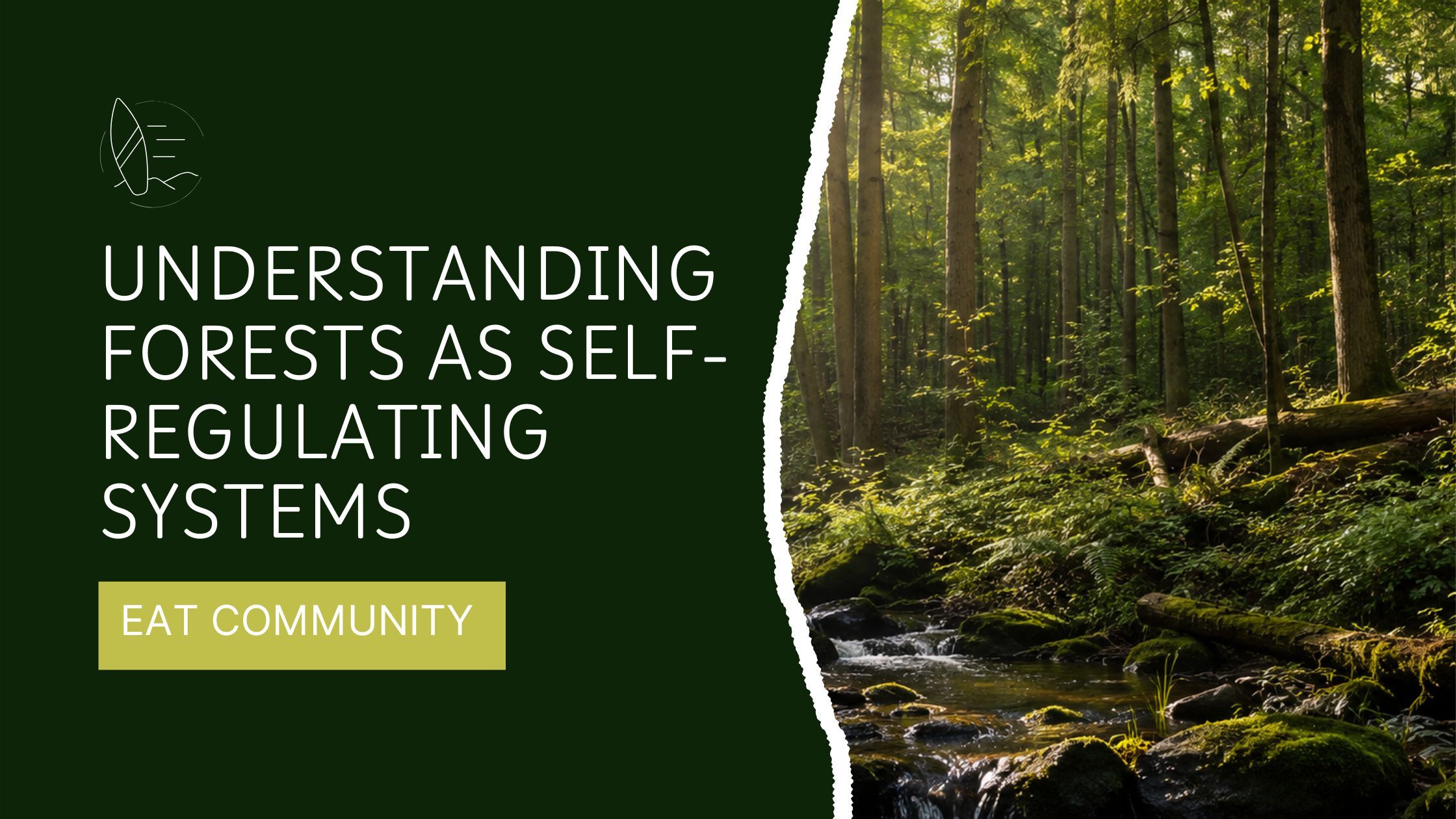
Forests are more than groups of trees. They are living, breathing systems that regulate themselves through countless interactions between plants, animals, soil, water, fungi, microbes, sunlight, and climate.
As the world faces climate change, biodiversity loss, drought, fire, disease, and land-use pressure, it is becoming more important than ever to understand how forests actually work. Good forest management is not simply about planting trees or preventing every disturbance. It is about protecting the natural processes that allow forests to adapt, recover, and remain healthy over time.
Organizations such as the Food and Agriculture Organization of the United Nations, the U.S. Forest Service, and the Intergovernmental Panel on Climate Change continue to emphasize the importance of sustainable forest management, climate resilience, water regulation, and ecosystem restoration.
Forests Are Living Systems
A forest does not have a central controller. No single tree, animal, or organism is “in charge.” Instead, the forest regulates itself through feedback loops.
A feedback loop happens when one change in the system causes other changes that respond to it.
For example:
-
More trees can reduce the amount of sunlight reaching the forest floor.
-
Less sunlight can slow the growth of young seedlings.
-
Slower regeneration can change which species survive.
-
Changes in species composition can affect water use, nutrient cycling, wildlife habitat, and future forest structure.
In a healthy forest, these relationships help the system adjust. The forest may change, but it does not immediately collapse. It absorbs stress, responds, and reorganizes.
That is what makes forests resilient.
Feedback Loops Help Forests Stay Balanced
Forests are always changing. Trees grow, die, fall, compete, regenerate, and interact with other organisms. These changes create balance over time.
When a forest becomes too dense, trees begin competing for light, water, and nutrients. Some trees grow more slowly. Others die. This reduces pressure on the remaining trees and allows the forest to continue functioning.
This may sound harsh, but it is part of how natural systems regulate themselves. Competition prevents unlimited growth. It keeps the forest from using more resources than the land can support.
This type of ecological balance is central to sustainable forest management, which focuses on maintaining forest health, productivity, biodiversity, and long-term resilience.
Resource Sharing Happens Below Ground
Some of the most important forest activity happens where we cannot see it: below the soil surface.
Tree roots, soil microbes, and fungal networks help move nutrients and water through the forest. Mycorrhizal fungi form relationships with plant roots and can help plants access nutrients that would otherwise be difficult to reach.
These underground relationships are often referred to as mycorrhizal networks. They support nutrient cycling, soil health, plant survival, and communication between plants.
This underground network helps explain why forests should not be managed only by looking at what is visible above ground.
A forest is not just trees. It is also soil, fungi, bacteria, insects, decaying wood, organic matter, roots, and water movement.
Disturbance Is Not Always Destruction
Many people think of fire, windstorms, insects, disease, and flooding as purely destructive. Sometimes they are. But disturbance also plays a natural role in forest renewal.
Disturbance can:
-
Remove excess biomass
-
Open space for new growth
-
Recycle nutrients
-
Create habitat diversity
-
Reduce overcrowding
-
Encourage regeneration
-
Prevent long-term structural uniformity
In many ecosystems, fire is not an enemy of the forest. It is part of the forest’s natural rhythm. The problem comes when natural disturbance patterns are suppressed for too long or when climate change, fuel buildup, and human development create extreme conditions.
The U.S. Forest Service provides extensive information on wildfire, forest resilience, and land management. Research on forest resilience also shows that changing disturbance regimes can affect the ecosystem services forests provide, including water regulation, habitat, and carbon storage.
Good forest management understands the difference between destructive disturbance and beneficial ecological reset.
Soil Microbes Keep Nutrients Moving
Soil is one of the most important parts of a forest system.
When leaves, branches, logs, and dead organisms fall to the ground, microbes break them down. This decomposition process releases nutrients back into the soil so plants can use them again.
This is one of the forest’s most important recycling systems.
Healthy soil biology supports nutrient availability, water retention, carbon storage, and plant growth. The USDA Natural Resources Conservation Service provides helpful resources on soil health and why living soil systems matter.
Without healthy soil biology, forests become weaker. Nutrients become less available. Water retention declines. Plant communities become less resilient. Restoration efforts that ignore soil health often fail because they are treating symptoms rather than rebuilding the system.
Forests Help Regulate Climate and Water
Forests also influence climate and water cycles.
Through canopy cover and evapotranspiration, forests can help moderate temperature, humidity, rainfall patterns, groundwater recharge, and streamflow. Trees shade the land, reduce erosion, filter water, and help stabilize moisture conditions.
The FAO Forest and Water Programme explains how forests influence streamflow, reduce erosion, support groundwater recharge, and contribute to atmospheric water recycling. The FAO also provides a useful overview of forests and water in sustainable forest management.
This creates a feedback effect. Healthier forests help create more stable growing conditions. Those stable conditions then support healthier forests.
This is one reason forest restoration is so important. It is not just about trees. It is about water security, soil protection, biodiversity, carbon cycling, local climate, and long-term land productivity.
Forests and Climate Change
Climate change is adding new pressure to forests around the world. Drought, heat, wildfire, pests, disease, and shifting rainfall patterns are changing how forests grow and recover.
The IPCC Special Report on Climate Change and Land explains how land degradation, climate change, food systems, and ecosystems are connected. The report also shows why forest protection, restoration, and sustainable land management are important parts of climate adaptation and mitigation.
Forest restoration can help improve carbon storage, biodiversity, water regulation, and landscape resilience. But restoration must be done carefully. Planting trees in the wrong place, using the wrong species, or ignoring local ecology can create new problems.
The best restoration strategies are based on the natural processes of the site.
What This Means for Forest Management
If forests are self-regulating systems, then management should not be based only on control. It should be based on working with natural processes.
That means asking better questions:
-
Are natural feedback loops still functioning?
-
Is regeneration occurring?
-
Is the forest too dense or too uniform?
-
Are soil and microbial systems healthy?
-
Are natural disturbance processes being suppressed or exaggerated?
-
Is the forest resilient to drought, fire, insects, and disease?
-
Are management actions supporting the system or interrupting it?
The goal is not to freeze a forest in one condition forever. Forests are supposed to change. The goal is to preserve the processes that allow forests to change without losing their ability to function.
Restoration Requires System-Based Thinking
Tree planting can be helpful, but planting trees alone is not the same as restoring a forest.
True restoration looks at the whole system:
-
Soil health
-
Water movement
-
Native species diversity
-
Wildlife habitat
-
Fire and disturbance patterns
-
Fungal and microbial activity
-
Forest structure
-
Long-term resilience
A successful restoration project helps the forest regain its ability to regulate itself.
That is the difference between managing a forest as a collection of trees and managing it as a living ecosystem.
For readers who want to explore restoration more deeply, the Society for Ecological Restoration offers resources and global standards for ecological restoration.
Conclusion
Forests are self-regulating systems driven by feedback loops, competition, resource cycling, disturbance, soil biology, and climate interaction.
Their stability does not come from staying the same. It comes from continuous adjustment.
When forests are healthy, they manage growth, recycle nutrients, regulate water, buffer climate, support biodiversity, and recover from stress. When these processes are damaged, the forest becomes more vulnerable to collapse, disease, fire, drought, and invasive species.
Understanding forests this way changes how we approach restoration and management. Instead of trying to control every part of the forest, we should focus on protecting and rebuilding the processes that allow forests to regulate themselves.
Join the Conversation
At the Ecolonomic Action Team, we believe that healthy ecosystems and healthy economies can work together. Forest restoration, land stewardship, soil health, water management, and climate resilience are all part of building a better future.
If you are interested in forest management, restoration, environmental consulting, land stewardship, and practical ecological solutions, we invite you to join our community.
Visit EAT Community to learn more and connect with like-minded people who want to make a little money while making the planet better.