
7 Practical Ways to Reduce the Environmental Footprint of Aquaculture
Aug 14, 2026
Aquaculture provides seafood, jobs, and income for communities around the world. However, every aquaculture operation uses resources and affects the environment in some way.
Feed, water, energy, fish waste, chemicals, and farm location can all influence a farm’s environmental footprint. The good news is that farmers can reduce many of these impacts by improving how they manage their operations.
The goal is simple: produce healthy aquatic food while using fewer resources, creating less waste, and protecting the surrounding environment.
1. Use Feed More Efficiently
Feed is one of the largest expenses on most fish farms. It can also be one of the biggest sources of environmental impact.
When fish do not eat all the feed they receive, the leftover feed settles in the water. Fish also release some of the nutrients from their feed as waste. Too much waste can reduce water quality and add excess nitrogen and phosphorus to nearby waterways.
Farmers can reduce feed waste by:
-
Choosing the correct feed for the species and growth stage
-
Using high-quality, responsibly sourced ingredients
-
Feeding smaller amounts at the right times
-
Watching fish behavior during feeding
-
Adjusting feeding rates when temperature or oxygen levels change
-
Monitoring the farm’s feed conversion ratio
-
Using cameras, sensors, or automatic feeders when practical
The Aquaculture Stewardship Council Feed Standard provides useful guidance on responsible feed production and ingredient sourcing.
Better feed management does more than protect the environment. It can also lower expenses and improve farm profitability.
2. Manage Water Carefully
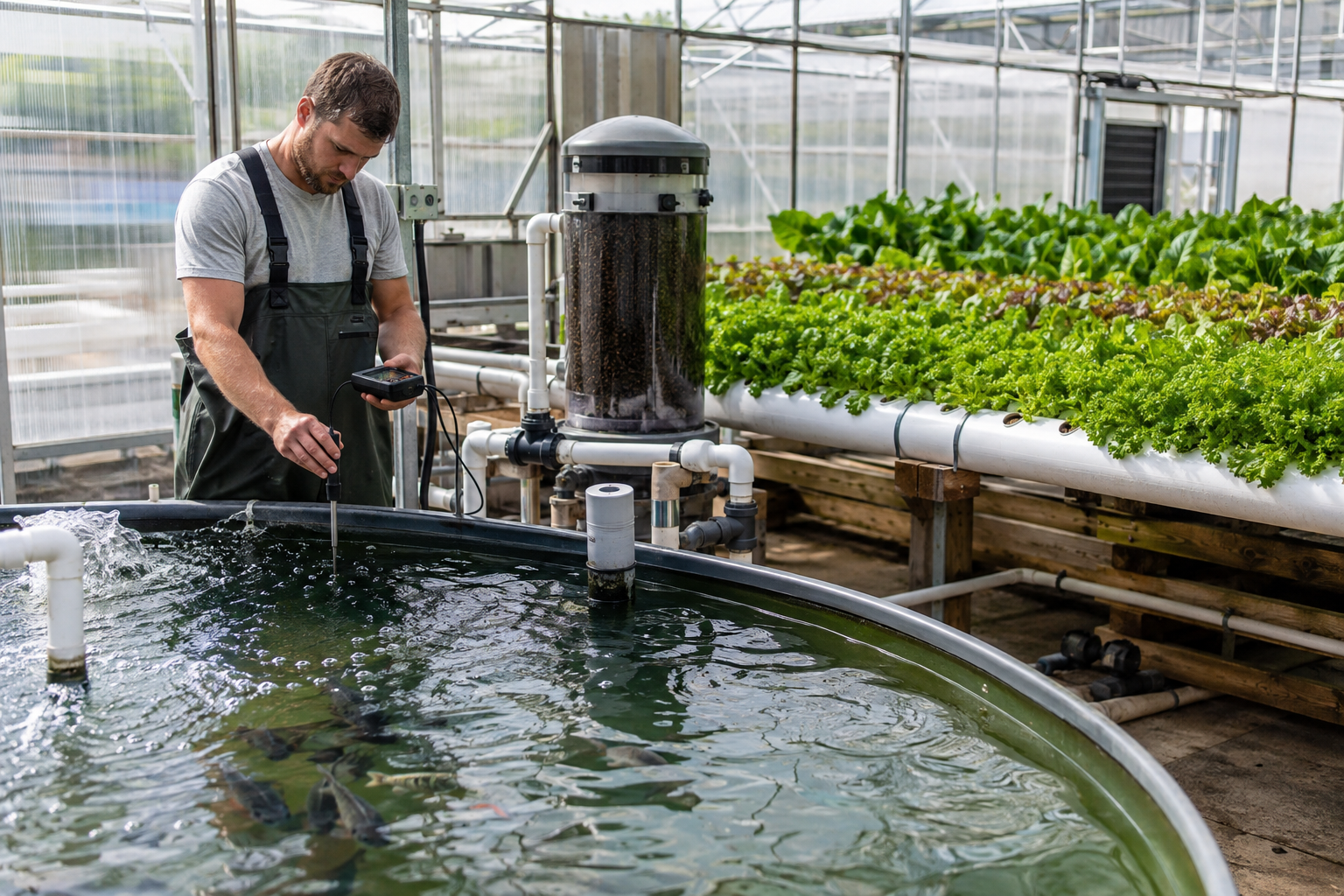
Fish live in the same water in which they eat, breathe, and release waste. Water quality therefore affects their health, growth, and survival.
Farmers should regularly monitor:
-
Dissolved oxygen
-
Water temperature
-
pH
-
Ammonia
-
Nitrite
-
Salinity, when appropriate
-
Suspended solids
Regular monitoring helps farmers identify problems before they become emergencies. It also reduces unnecessary water replacement.
Recirculating aquaculture systems can filter and reuse much of their water. Ponds and flow-through systems can also use settling basins, biological filters, constructed wetlands, or other treatment methods to improve wastewater quality.
However, recirculation systems may require more electricity for pumping, aeration, and filtration. Farms should consider both water and energy use when choosing a system.
The U.S. Environmental Protection Agency explains how permits and best management practices can help facilities manage aquaculture discharges and protect water quality.
3. Turn Waste Into a Resource
Fish waste contains nutrients that can become pollutants if a farm releases them without treatment. Instead of simply discarding this waste, farmers can recover and reuse it.
Depending on the production system, farms may use fish waste to support:
-
Aquatic plants
-
Algae
-
Seaweed
-
Shellfish
-
Beneficial microorganisms
-
Compost production
-
Soil amendments
-
Aquaponic vegetables
Aquaponics connects fish production with plant production. Nutrients from fish waste help feed the plants, while the plants and biological filters help clean the water.
Integrated multi-trophic aquaculture uses several aquatic species together. Waste from one species becomes a resource for another. For example, seaweed can take up dissolved nutrients, while shellfish can filter small particles from the water.
NOAA reports that some shellfish and seaweed farms can improve water quality and provide other ecosystem benefits.
These systems must still be designed and monitored carefully, but they show how farmers can turn a waste-management problem into another source of value.
4. Protect Nearby Ecosystems
A farm’s location can determine much of its environmental impact. Before building or expanding a facility, farmers should study the surrounding water, soil, wildlife, habitats, and local communities.
A good location should have enough water movement and environmental capacity to handle the planned level of production. Farms should avoid sensitive wetlands, breeding areas, and other important habitats whenever possible.
Farm operators should also:
-
Prevent farmed fish from escaping
-
Store chemicals and fuels safely
-
Treat wastewater before releasing it
-
Avoid overstocking
-
Monitor water and sediment around the farm
-
Follow local environmental regulations
-
Prepare plans for storms, floods, equipment failures, and fish escapes
According to NOAA, environmental problems can occur when nutrient inputs exceed an ecosystem’s ability to process them. Careful farm placement, modern technology, and responsible management can reduce these risks. Learn more from NOAA’s guide to the nutrient impacts of finfish aquaculture.
5. Reduce Energy Consumption
Aquaculture operations may use pumps, aerators, filters, feeders, lighting, refrigeration, and temperature-control equipment. All this equipment consumes energy.
Farmers can reduce energy use by:
-
Replacing inefficient pumps and aerators
-
Using variable-speed motors
-
Cleaning and maintaining equipment regularly
-
Improving pipe and water-flow designs
-
Fixing leaks
-
Turning off unnecessary equipment
-
Using gravity to move water when possible
-
Installing solar or other renewable-energy systems where practical
An energy audit can show which equipment uses the most electricity. This allows the farmer to begin with the changes that will produce the greatest savings.
Using less energy can lower operating costs and reduce the greenhouse gas emissions connected with production.
6. Prevent Disease Before It Starts
A disease outbreak creates both financial and environmental problems. Sick fish may eat less, grow slowly, or die. Farmers may then need additional water, labor, energy, and treatments to control the outbreak.
Good prevention starts with strong biosecurity. Farms should:
-
Purchase healthy stock from trusted sources
-
Quarantine new animals
-
Clean and disinfect equipment
-
Limit unnecessary access to production areas
-
Maintain suitable stocking densities
-
Remove dead or sick animals quickly
-
Provide balanced nutrition
-
Keep water conditions stable
-
Monitor fish behavior every day
Vaccination may also be appropriate for certain species and diseases.
Prevention reduces mortality and limits the need for emergency treatments. It also helps farmers use feed, water, and energy more efficiently.
7. Measure Results and Keep Improving
A farm cannot improve what it does not measure.
Farmers should keep records of:
-
Feed use
-
Fish growth
-
Mortality
-
Water consumption
-
Energy consumption
-
Water-quality results
-
Treatments
-
Waste production
-
Fish escapes
-
Environmental monitoring results
Digital sensors and automated monitoring systems can collect some of this information continuously. Even simple daily records can help a farmer identify patterns and find areas for improvement.
The key is to set clear goals. A farm might aim to reduce feed waste, lower electricity use, improve survival, reuse more water, or recover more nutrients. Farmers can then compare their results over time.
The Aquaculture Stewardship Council standards provide another useful framework for examining environmental responsibility, farm management, animal welfare, and social performance.
Small Improvements Can Produce Big Results
No single technology will make every aquaculture operation sustainable. Farms differ in species, climate, size, location, and production methods.
The best approach is to combine several practical improvements:
-
Use feed carefully
-
Protect water quality
-
recover useful nutrients
-
prevent pollution, and fish escapes
-
reduce energy consumption
-
strengthen biosecurity
-
Measure results continuously
Small improvements can add up. When farms waste less feed, water, and energy, they often reduce their operating costs at the same time.
Responsible aquaculture can provide nutritious food, create employment, support rural and coastal communities, and reduce pressure on some wild fish populations. NOAA offers additional information about the potential social, economic, and environmental benefits of responsible aquaculture.
Related Articles and Resources
-
Why Evaluating Water Chemistry and Fish Growth Performance Matters — Learn how dissolved oxygen, temperature, pH, ammonia, and other conditions influence feeding, health, and growth.
-
FAO Guidelines for Sustainable Aquaculture — International guidance for improving food security, livelihoods, environmental protection, and climate resilience through responsible aquaculture.
-
NOAA Aquaculture Resources — Information about aquaculture science, environmental management, regulation, and economic opportunities.
-
EPA: Managing Aquaculture to Protect Water Quality — Guidance on pollution controls, permits, effluent limits, and best management practices.
-
Aquaculture Stewardship Council Standards — Standards and resources for responsible seafood farming and feed production.
-
USDA Aquaculture Resources — Information about aquaculture production, research, programs, and assistance in the United States.
Take the Next Step With the EAT Community
Would you like to learn more about building businesses that protect natural resources and create meaningful economic opportunities?
Join the Ecolonomics Action Team to access educational resources, expert conversations, and practical ideas for making a little money while making the planet better.