
Understanding Forest Ecology Through the Hidden Life on Leaves
Apr 08, 2026
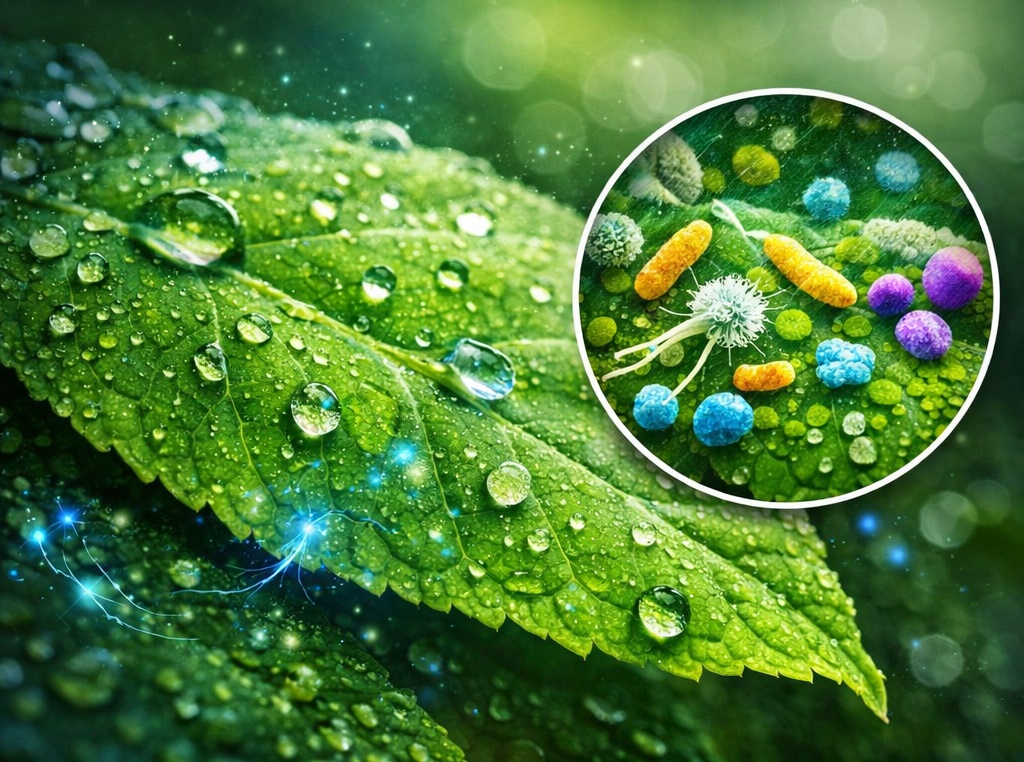
When you look at a leaf, you probably see a green surface doing the work of photosynthesis. However, that is only part of the story. A leaf is also home to a busy and invisible world of bacteria, fungi, yeasts, and other microorganisms. Scientists often call this the phyllosphere, or the leaf surface environment, and the community living there is known as the leaf microbiome.
For those of us who care about forests, farms, and ecological land stewardship, this matters a great deal. In other words, leaves are not just passive surfaces. Instead, they are living ecological zones that can help determine whether a plant merely survives or truly thrives.
Leaves Are Tiny Ecosystems
To begin with, every leaf hosts a changing microbial community. These microorganisms do not just land there by accident. Rather, they interact with the plant and with each other in ways that can shape resilience, disease pressure, and nutrient use. At the same time, the makeup of that community changes with humidity, temperature, sunlight, plant species, leaf age, and seasonal shifts.
That means a forest canopy is not simply made up of leaves. Instead, it is made up of millions upon millions of tiny microbial habitats, each responding to weather, climate, and plant condition.
If you want to explore the scientific side of this more deeply, you can read more about plant-microbe interactions in the phyllosphere.
Why Leaf Microbiomes Matter for Plant Health
Just as importantly, many microbes on leaves help protect plants from disease. Some beneficial organisms compete with pathogens for space and nutrients. Others produce antimicrobial compounds. Still others appear to help activate plant defense responses. As a result, a more diverse leaf microbiome can make it harder for harmful organisms to take hold.
This is especially relevant for both forestry and agriculture. When microbial diversity is strong, plants may be better able to withstand disease outbreaks. Consequently, supporting these natural microbial communities may help reduce dependence on heavy chemical inputs in some systems.
Likewise, USDA-supported research has highlighted the importance of the plant microbiome in agriculture, including leaf-associated microbial communities and their role in plant performance. You can see an overview in this review of the plant microbiome in sustainable agriculture.
Leaf Surfaces Also Help with Nutrient Dynamics
At first glance, it may seem that nutrient uptake is mostly about roots and soil. Yet leaves also capture dust, pollen, and airborne compounds. Then, microbes on the leaf surface can help process those materials. In some cases, bacteria and fungi transform deposited substances into forms that are more useful to the plant or more active within the local ecosystem.
So, while roots remain essential, leaf microbiomes can provide a second layer of ecological function. In nutrient-limited or stressed environments, that extra layer may be more important than many land managers realize.
Forest Ecology Includes Microbial Diversity Too
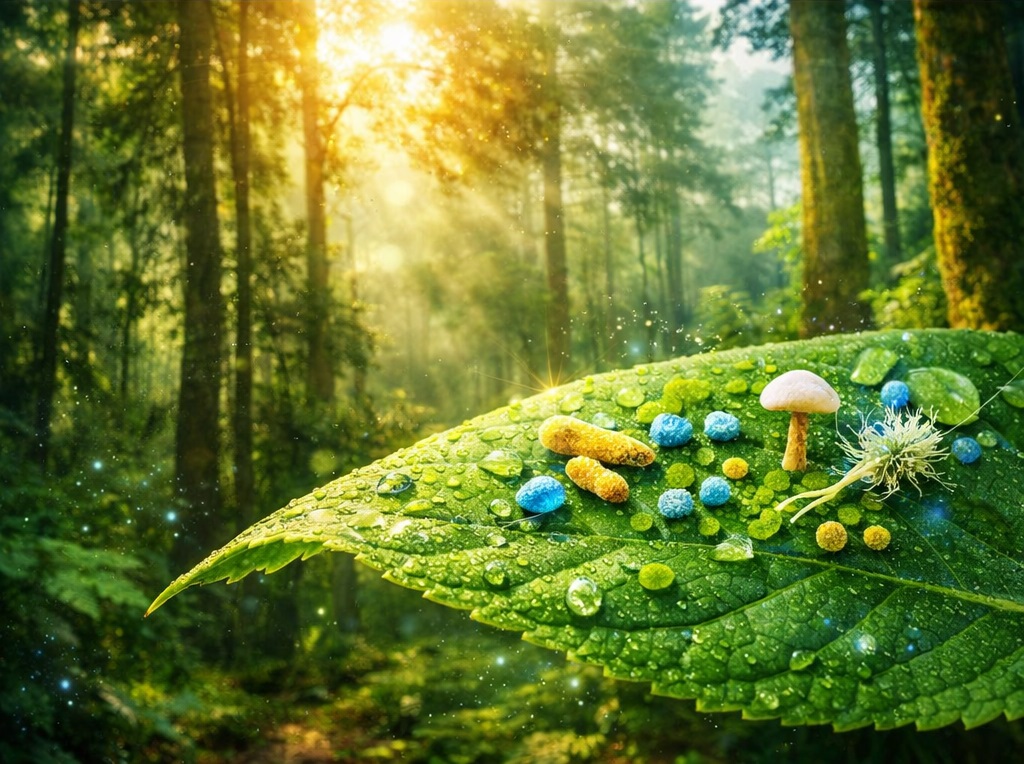
When people talk about forest ecology, they often focus on trees, wildlife, soils, and water. All of that is important. Even so, forest biodiversity also includes microorganisms and the ecological roles they perform. In fact, FAO notes that forest biological diversity includes not only trees and animals, but also fungi and microbes that help sustain forest systems.
Therefore, if we want to understand how forests function, we need to think beyond what we can see. The health of a forest is tied not only to its canopy structure and species mix, but also to the microbial life associated with its leaves and other plant surfaces.
For a broader ecological view, FAO provides helpful information about forest biological diversity.
Leaf Microbiomes Can Warn Us About Stress
Another reason this topic matters is that leaf microbiomes can act as early environmental indicators. When pollution, climate stress, habitat disturbance, or excessive chemical use affect a landscape, microbial communities may shift before visible plant damage becomes obvious. In that sense, the leaf surface can serve as an early warning system.
Because of that, monitoring microbial patterns could eventually become a practical way to assess resilience in forests, orchards, farms, and restoration sites.
What This Means for Farmers, Foresters, and Land Stewards
So what should we do with this information?
First, we should stop thinking of leaves as simple plant parts. Instead, we should see them as living interfaces between the plant and the environment.
Second, we should recognize that management choices can influence these microbial communities. For example, reducing unnecessary chemical stress, improving ecological diversity, and using more biologically informed practices may help support stronger leaf microbiomes over time. That does not mean chemistry never has a place. Rather, it means we should work with biological systems whenever possible, not against them.
Finally, we should remember that sustainability often depends on small processes working together. Leaf microbiomes may be invisible, but their impact can be very real.
A Better Way to Think About Plant Health
At EAT Community, we believe the best ecological solutions often come from understanding how nature already works. And this is a perfect example. The more we understand the hidden life on leaves, the better we can design farming and forestry systems that are resilient, productive, and ecolonomic.
In the end, the next frontier in plant health may not be only in the soil. It may also be right there on the surface of every leaf.
Be Part of a Smarter Ecological Future
If you want to learn more about practical ecology, resilient land stewardship, and making a little money while making the planet better, join us at EAT Community. We explore ideas like this to help you build systems that are both environmentally sound and economically smart.